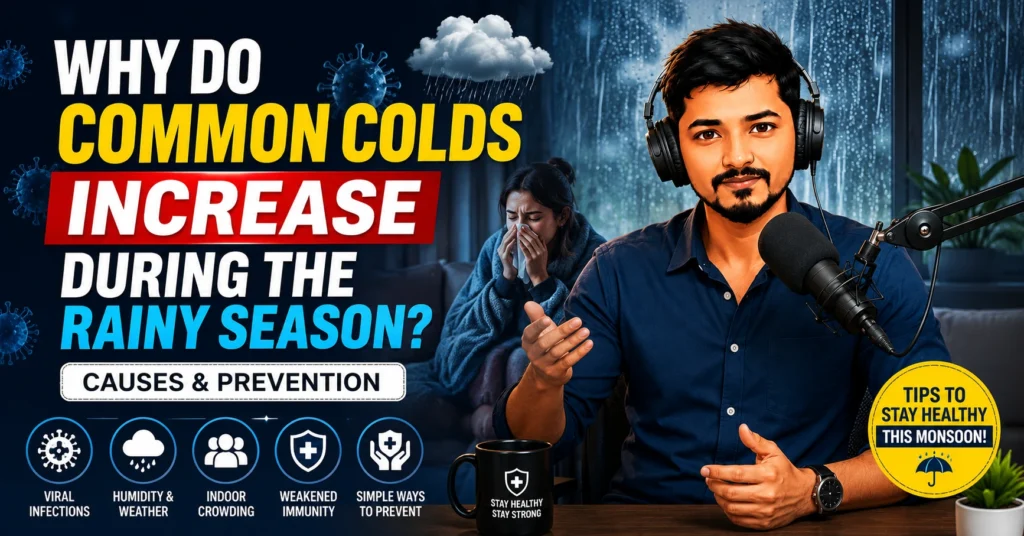
Wondering why common colds increase during the rainy season? Learn the causes, symptoms, prevention tips, and effective home remedies to stay healthy during monsoon.
There’s a very specific kind of betrayal that happens every monsoon. You step out without an umbrella for two minutes — just two — and by evening you’re sneezing like you’ve personally offended the weather gods. It reminds you of your grandmother’s favorite saying: “Stay out of the rain, or you’ll catch a common cold. Here’s the twist she probably didn’t mention: the rain itself isn’t actually the villain in this story. What’s really happening is far more interesting, and understanding it might just save you from your next monsoon cold.
Why Do Common Colds Increase During the Rainy Season? Causes & Prevention
Does Getting Wet in the Rain Actually Cause a Cold?
Let’s settle this once and for all: no, rain does not directly cause a common cold. A cold is caused by a viral infection — usually rhinoviruses — not by water, dampness, or a chilly breeze. You could stand in the rain for an hour and, without exposure to the actual virus, you simply won’t catch a cold from the water alone.
So why does everyone insist otherwise? Because getting wet and cold does create the perfect backstage conditions for the virus to do its work more easily. It’s less “rain causes common cold” and more “rain rolls out the red carpet for it.”
Why Do Common Colds Increase During the Rainy Season?
This is where the real story gets going, and it comes down to a handful of overlapping factors working together like an unwanted ensemble cast.
1. Temperature fluctuations confuse your body. Monsoon weather swings wildly — humid and warm one hour, cool and windy after a downpour the next. These constant temperature changes stress your body’s regulatory systems, and research suggests this fluctuation may temporarily narrow blood vessels in your nasal passage, making it easier for viruses already present to take hold.
2. Humidity helps viruses survive and spread. Common Cold and flu viruses, particularly rhinoviruses, tend to thrive and transmit more efficiently in the humid, moderate-temperature conditions typical of monsoon season — different from dry winter conditions, but just as favorable for viral spread.
3. Indoor crowding increases exposure. When it’s pouring outside, everyone piles indoors — packed buses, crowded offices, jam-packed classrooms with windows shut against the rain. Viruses spread through respiratory droplets, and closed, crowded spaces are basically their preferred party venue.
4. Your immune system takes a monsoon hit. Reduced sunlight means lower Vitamin D synthesis. Rainy nights, sticky humidity, and feeling unusually tired during the monsoon can take a toll on your immune system. As a result, your body may be less effective at fighting off the viruses that cause Common colds.
5. Water contamination adds another layer. Monsoon flooding and waterlogging can affect drinking water quality in many areas, contributing to overall susceptibility to infections during the season, even beyond respiratory ones.
Learn more in our in-depth guide on [How to prevent seasonal flu naturally.
Are Cold and Flu More Common in Rainy Weather?
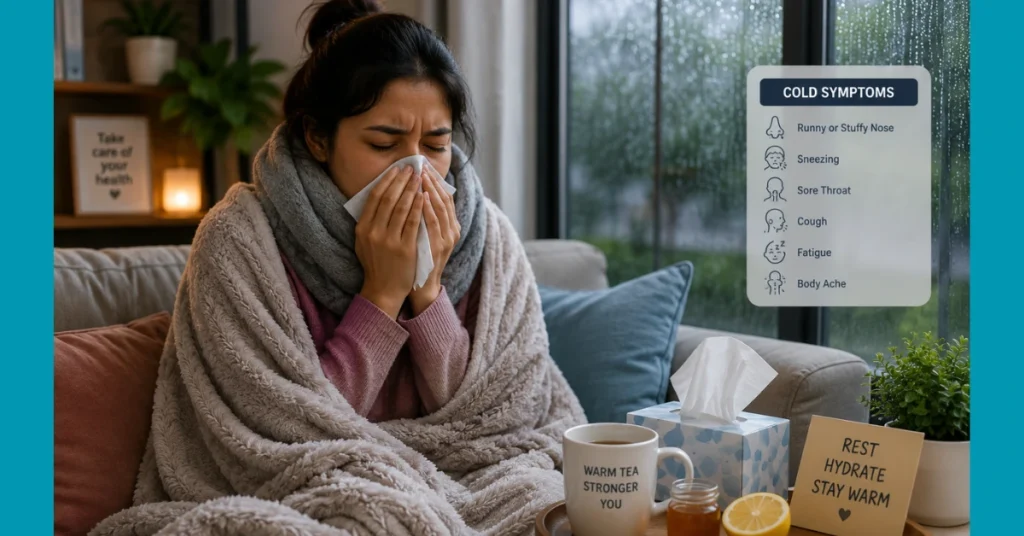
Yes — both cold and flu cases genuinely spike during monsoon months across India. All of these factors combined can make you more vulnerable to several respiratory infections, not just the common cold. This is also why monsoon season often sees viral fever, sore throat, and flu cases circulating simultaneously in most Indian cities.
First Signs of a Monsoon Cold
- Cold symptoms during rainy season typically follow a familiar pattern, though monsoon common colds often feel heavier due to the accompanying humidity:
- Runny or blocked nose
- Sneezing bouts, especially in the morning
- Sore or scratchy throat
- Mild body ache and fatigue
- Watery eyes
- Occasional low-grade fever
How Long Does a Monsoon Common Cold Usually Last?
Most monsoon colds resolve within 5 to 7 days with basic rest and home care. If symptoms drag on beyond 10 days, or worsen instead of improving, it’s worth getting checked rather than waiting it out.
Allergy Symptoms vs Common Cold Symptoms: Key Differences Explained
| Symptom | Common Cold | Seasonal Allergy |
| Onset | Gradual, over 1-2 days | Sudden, often immediate |
| Fever | Sometimes, mild | Rarely |
| Body ache | Common | Uncommon |
| Duration | 5-7 days | Persists while trigger present |
| Itchy/watery eyes | Occasional | Very common |
| Sore throat | ommon | ess common |
If your symptoms flare up specifically indoors near dust or mold (common during humid monsoon months) and vanish quickly with antihistamines, you’re likely dealing with allergies rather than a viral cold.
How to Protect Yourself from Common Colds During Monsoon
Stay dry, and dry off fast. If you do get caught in the rain, change out of wet clothes promptly and dry your hair and feet thoroughly — a quick-dry towel in your bag is genuinely worth it.
Keep your hands clean, always. Since common colds spread through contact and droplets, frequent handwashing with hand wash or sanitizer remains your single most effective defense.
Support your immune system through food. Warm, immunity-friendly foods and drinks — tulsi tea, ginger tea, and honey in warm water — are staples of Indian monsoon wellness for good reason. Adding Vitamin C and zinc-rich foods to your diet also supports your body’s natural defenses.
Maintain good indoor air. In humid, closed spaces, a room humidifier or air purifier can help maintain more comfortable, less irritant-heavy indoor air.
Watch temperature transitions. Moving between air-conditioned offices and humid outdoor air repeatedly is a classic monsoon cold trigger. Carry a light jacket, and let your body adjust gradually where possible.
Stay hydrated. Warm water, herbal teas, and electrolyte drinks help your body function optimally, especially if appetite dips during humid weather.
Check out our detailed article on “Early Symptoms of Dengue Fever”.
Who Is More Likely to Catch a Common Cold During the Rainy Season?
Although anyone can catch a cold, some people are at a higher risk during the rainy season because their immune system is weaker or they are more likely to be exposed to viruses.
Young Children
Children, especially those under 5 years old, have developing immune systems and often come into close contact with others at schools and daycare centers, making them more likely to catch colds.
Older Adults
As people age, their immune system naturally becomes less effective, increasing their susceptibility to respiratory infections during the monsoon season.
People with Chronic Respiratory Conditions
Those with asthma, chronic bronchitis, COPD, or allergies may experience more frequent or severe symptoms when they catch a cold during the rainy season.
People Who Don’t Get Enough Sleep
Poor-quality or insufficient sleep can weaken the immune system, making it harder for the body to fight off cold viruses.
People with Weakened Immune Systems
Individuals with conditions such as diabetes, cancer, HIV, or those taking immunosuppressive medications are more vulnerable to viral infections, including the common cold.
Strengthen Your Immunity This Rainy Season
The best way to reduce your chances of catching a cold is to support your immune system every day. While healthy eating, quality sleep, and regular exercise are essential, a high-quality immunity booster supplement can help fill nutritional gaps and support your body’s natural defenses.
If you’re looking for a trusted option, check out the immunity booster recommended below. It’s formulated with key immune-supporting ingredients and can be a convenient addition to your daily wellness routine—especially during the rainy season when colds and other viral infections are more common.
👉 Click the button below to see if this immunity booster is right for you.

- Essential Daily Immune Support for Adults and Kids* – Formulated with vitamins C, D3, and zinc to support immune health …
- Made with 64x Concentrated Black Elderberry Extract – Handpicked elderberries are turned into a potent extract made from…
- Bursting with Superfood Antioxidants – Elderberries have been traditionally used for immune support and have naturally o…

- 30ct of Emergen-C Immune+ Triple Action Immune Support Powder, with 200mg of BetaVia (R), 1000mg Vitamin C per serving, …
- Support your immune system in three ways with Immune+ Triple Action – our advanced immune support formula (2)
- BetaVia (R) activates immune cells so they are ready for action. Key antioxidants Vitamin C, as well as Zinc and Mangane…
Stay healthy. Stay protected. Give your immune system the support it deserves this monsoon!
When Should You See a Doctor?
- Most monsoon common colds are manageable at home, but see a doctor if you experience:
- Fever above 101°F lasting more than 2 days
- Difficulty breathing or chest tightness
- Symptoms persisting beyond 10 days
- Severe headache or ear pain
- Signs of dehydration
A digital thermometer at home makes it far easier to track whether your fever is genuinely escalating or just an ordinary blip.
The Real Takeaway This Monsoon
Rain isn’t out to get you — but it does create the ideal backstage conditions for viruses that are already circulating around you. Temperature swings, crowded indoor spaces, humidity, and a slightly weaker immune system all conspire together, and understanding that combination is your best defense.
So the next time someone says “you’ll catch a common cold if you get wet,” you can smile knowingly and reach for your umbrella anyway — not because the rain itself is the enemy, but because staying warm, dry, and hydrated genuinely keeps your immune system fighting fit through the season. Stay dry, stay warm, and keep that tulsi tea brewing. Monsoon is beautiful — no need to spend it sniffling through it.
FAQs
Why do people catch more common colds during the rainy season?
People tend to catch more common colds during the rainy season because viruses spread more easily in cool, humid conditions. During monsoon, people also spend more time indoors, increasing close contact with others. Poor ventilation, disrupted sleep, and weakened immunity may further raise the risk of infection.
Can getting wet in the rain cause a cold?
No. Getting wet in the rain does not directly cause a cold. The common cold is caused by viruses, not rain. However, being cold, wet, or chilled may temporarily reduce your body’s defenses, making it easier for a virus you’re already exposed to cause an infection.
How can I prevent common colds during the rainy season?
You can reduce your risk of catching a common cold by washing your hands regularly, avoiding close contact with sick people, getting enough sleep, staying hydrated, eating a balanced diet, and changing out of wet clothes promptly. Maintaining a healthy immune system is one of the best ways to prevent seasonal infections.
When should I see a doctor for a common cold?
Most common colds improve within 7–10 days with rest and supportive care. However, you should seek medical attention if you have a high fever, difficulty breathing, chest pain, symptoms lasting longer than 10 days, or if your condition worsens instead of improving. Children, older adults, pregnant women, and people with weakened immune systems should consult a healthcare provider if they develop severe or persistent symptoms.
Conclusion
The rainy season may bring cooler weather and refreshing showers, but it also creates conditions that allow cold viruses to spread more easily. While getting caught in the rain doesn’t directly cause a cold, factors such as increased indoor gatherings, high humidity, poor ventilation, disrupted sleep, and a weakened immune system can make you more susceptible to infection.
The good news is that most colds are preventable. By practicing good hand hygiene, eating a balanced diet, staying hydrated, getting enough quality sleep, and avoiding close contact with people who are sick, you can significantly reduce your risk of catching a cold during the monsoon season.
If your symptoms become severe, last longer than expected, or are accompanied by a high fever or difficulty breathing, don’t ignore them—seek medical advice promptly. Taking simple preventive measures today can help you and your family stay healthy, active, and enjoy the rainy season without letting the common cold get in the way.
Author Bio:
Hi, I’m MACHHINDRA Jadhav — a passionate Health Content Writer with 4+ years of experience in the health and wellness space. I specialize in breaking down complex topics like Disease & Conditions, Fitness, Mental Health, and Nutrition into simple, practical advice you can actually use in your daily life.
My goal is not just to inform, but to empower you to take control of your health naturally and confidently. Every article I write is backed by research, real insights, and a deep commitment to helping people live healthier, stronger, and more balanced lives.
If you’re looking for clear, honest, and actionable health guidance — you’re in the right place.
References:
- National Institute of Diabetes and Digestive and Kidney Diseases (NIDDK)
- Mayo Clinic
- World Health Organization (WHO)
Disclaimer:
This content is for informational purposes only and is not intended as medical advice. Individual results may vary. Please consult a qualified healthcare professional or nutritionist before making any significant changes to your diet or weight loss plan.
Affiliate Disclosure:
This post contains affiliate links. If you purchase through these links, I may earn a small commission at no extra cost to you. I only recommend products that I believe offer genuine value to my readers and align with a healthy lifestyle.