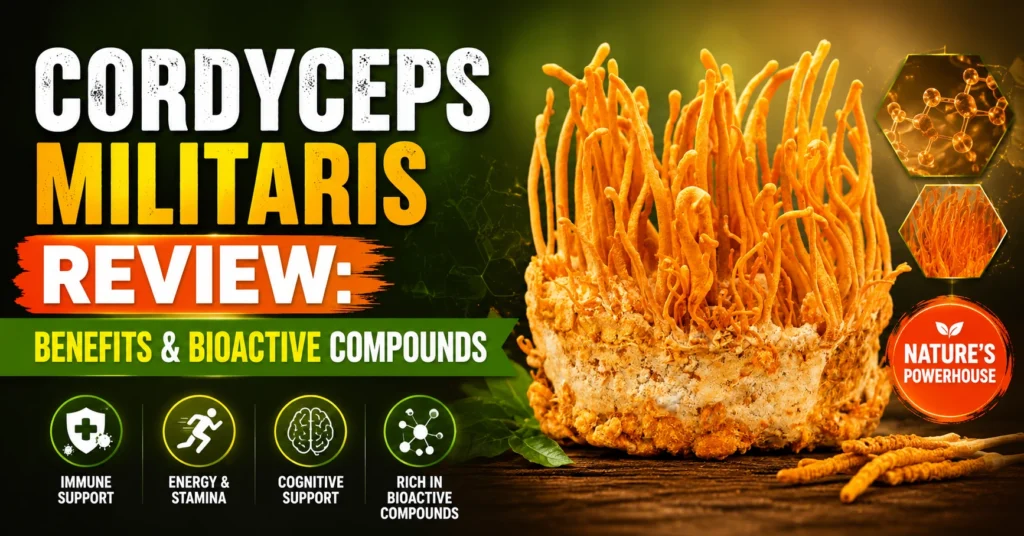
Explore the full medicinal potential of Cordyceps militaris from cordycepin and polysaccharides to anticancer, anti-inflammatory, immunomodulatory, and antidiabetic properties backed by current research.
Cordyceps militaris Review: Benefits & Bioactive Compounds
Introduction
The intersection of traditional ethnomedicine and modern pharmacological science has brought renewed global attention to medicinal fungi. Among the hundreds of species studied, Cordyceps militaris (L.:Fr.) Link stands apart as one of the most pharmacologically significant and commercially viable medicinal mushrooms known to contemporary science.
Used for centuries in traditional Chinese and Tibetan medicine as an adaptogenic tonic, C. militaris has transitioned from folk remedy to active subject of rigorous biomedical investigation. Its growing relevance reflects a broader global shift: the World Health Organization (WHO) estimates that approximately 80% of the world’s population relies on traditional herbal or fungal medicines for some aspect of primary healthcare — a reality that places functional organisms like Cordyceps at the forefront of pharmaceutical discovery.
Unlike its close relative Cordyceps sinensis — which parasitizes ghost moth larvae at high Himalayan altitudes and remains notoriously difficult to cultivate — C. militaris can be commercially cultivated on artificial substrates under controlled conditions. This cultivability has democratized access to its bioactive compounds, enabling large-scale extraction, clinical investigation, and product development across nutraceutical and pharmaceutical industries alike. This comprehensive review examines C. militaris across multiple dimensions: its taxonomy and ecology, the full profile of its bioactive constituents, its demonstrated and emerging therapeutic applications, its safety profile, and the current state of clinical translation. It builds on and significantly extends the findings of earlier literature reviews to provide the most complete available summary of this remarkable organism’s medicinal utility.
Taxonomy, Ecology, and Morphology of Cordyceps militaris
Taxonomic Classification
Cordyceps militaris belongs to the phylum Ascomycota, class Sordariomycetes, order Hypocreales, and family Cordycipitaceae. Recent phylogenetic reclassifications — informed by molecular data — have separated many traditional Cordyceps species into the allied genus Ophiocordyceps, while C. militaris remains within the Cordyceps sensu stricto clade
Distribution and Natural Habitat
C. militaris is naturally distributed across North America, Europe, East Asia, and South Asia, where it functions as an obligate insect endoparasitoid — primarily colonizing the pupae of lepidopteran insects. In nature, the fungus germinates from insect cadavers buried in forest soil, producing a characteristic orange to red, club-shaped fruiting body (stroma) measuring 3–8 cm in height. The stroma surface is covered with perithecial ostioles that release ascospores for further dissemination.
Comparison with Cordyceps sinensis
While C. sinensis shares the genus with C. While C. militaris and C. sinensis possess many comparable bioactivities, they vary substantially in terms of ecological requirements, polysaccharide molecular weight, and habitat specificity. militaris offers a critical practical advantage: it is cultivable on grain-based and plant-derived substrates, reducing dependency on parasitic insect substrates and enabling standardized, large-scale production. This cultivability is the primary driver of its expanding commercial and research significance relative to wild-harvested C. sinensis.
Bioactive Components: A Complete Profile
The pharmacological potency of Cordyceps militaris derives from a rich and chemically diverse array of bioactive molecules. Ongoing phytochemical studies have identified and characterized more than 50 distinct compounds across multiple chemical classes.
Cordycepin (3′-Deoxyadenosine)
Cordycepin — chemically designated as 3′-deoxyadenosine (C₁₀H₁₃N₅O₃) — is the signature bioactive compound of C. militaris and the one most extensively investigated for pharmacological activity. Its structure closely resembles adenosine but lacks a hydroxyl group at the 3′ position of the ribose sugar, a structural distinction that underlies its broad biological effects.
Cordycepin concentrations vary between the fruiting body (approximately 0.11%) and the mycelium body (approximately 0.182%), with mycelial extraction increasingly preferred for higher yield during commercial production.
Pharmacological mechanisms attributed to cordycepin include:
- Inhibition of polyadenylation of mRNA, disrupting protein synthesis in rapidly dividing cells
- Interference with adenosine receptor signaling, modulating immune and inflammatory cascades
- Induction of apoptosis in cancer cell lines through both intrinsic and extrinsic pathways
- Inhibition of 3′-polyadenylation that affects gene expression regulation
Polysaccharides
C. militaris polysaccharides represent one of the most structurally complex and biologically active compound classes within the organism. Molecular weights range broadly from 1.273 × 10³ to 4.36 × 10⁴ Da, with structural heterogeneity producing varied immunological and metabolic effects.
Key characterized polysaccharide types include:
- β-glucans — recognized by innate immune receptors including Dectin-1 and TLR2
- Galactomannan-type heteropolysaccharides — demonstrating immunostimulatory activity in lymphocyte assays
- Water-soluble homopolysaccharides composed of D-glucose, D-mannose, and D-galactose, with documented NK cell activation capacity
Ergosterol and Ergothioneine
Ergosterol is a steroidal provitamin (precursor to vitamin D₂) with anti-tumor, anti-inflammatory, and membrane-stabilizing properties. In the fruiting body of C. militaris, ergothioneine concentrations reach 782.37 mg/kg — significantly higher than in the mycelium body (130.65 mg/kg) — making the fruiting body the preferred source for ergothioneine-enriched formulations.
Ergothioneine is a naturally occurring amino acid with exceptional antioxidant properties, now recognized as a cytoprotective molecule with roles in mitochondrial protection, reduction of oxidative DNA damage, and potential neuroprotection.
Additional Bioactive Compounds
Beyond the primary actives, C. militaris contains a broader panel of pharmacologically relevant molecules:
| Compound Class | Specific Compounds | Key Activities |
| Nucleosides | Adenosine, uridine, guanosine | Cardiovascular, immunomodulatory |
| Polyols | D-mannitol (cordycepic acid) | Osmotic regulation, antitussive |
| Carotenoids | Lutein, zeaxanthin | Antioxidant, vision protection |
| Phenolics | Flavonoids, polyphenols | Antioxidant, anti-inflammatory |
| Amino acids | GABA, ergothioneine | Neurological, cytoprotective |
| Sterols | Ergosterol, lovastatin | Anti-tumor, hypolipidemic |
| Biominerals | Potassium (15,938 mg/kg), Sulfur (5,088 mg/kg), Magnesium (4,227 mg/kg), Selenium (0.4 mg/kg) | Enzymatic, antioxidant, metabolic |
| Lectins and cerebrosides | Lectins and cerebrosides Multiple species | Immunological signaling |
The mineral profile is particularly noteworthy: potassium content in the fruiting body exceeds 15,938 mg/kg, and selenium — a critical trace element for antioxidant enzyme systems — is present in bioavailable form.
Don’t miss our comprehensive guide on Insomnia Symptoms in Women.
Biological Activities and Therapeutic Applications
Anti-Inflammatory Properties
Inflammation is a fundamental protective mechanism of the mammalian immune system, yet chronic or unresolved inflammation underlies pathogenesis in conditions ranging from arthritis and inflammatory bowel disease to metabolic syndrome and neurodegeneration.
C. militaris and its primary bioactive, cordycepin, exert anti-inflammatory effects through multiple molecular pathways:
- Downregulation of iNOS and COX-2 expression — two key enzymes whose overactivation drives pathological inflammation
- Inhibition of NF-κB signaling — a master transcriptional regulator of pro-inflammatory cytokine production
- Reduction of interleukin-6 (IL-6) and tumor necrosis factor-alpha (TNF-α) secretion in activated macrophage models
- Attenuation of phospholipase A2 activity, reducing production of arachidonic acid-derived inflammatory mediators
A 2022 review published in MDPI’s Nutrients (Phull et al., 2022) confirmed that cordycepin suppresses both acute and chronic inflammatory responses across multiple experimental models, positioning it as a candidate for development as a natural anti-inflammatory pharmaceutical.


Anticancer and Anti-Metastatic Activity
The anticancer potential of C. militaris represents one of its most extensively researched and therapeutically significant areas. Mechanisms operate across multiple hallmarks of cancer as defined by Hanahan and Weinberg’s landmark framework.
In vitro evidence:
- Water extracts of C. militaris suppressed proliferation of human sarcoma cell line HT1080 and human umbilical vein endothelial cells (HUVEC)
- Inhibition of matrix metalloproteinase-2 (MMP-2) expression in HT1080 — a key protease facilitating tumor invasion and metastasis
- Suppression of basic fibroblast growth factor (bFGF) in HUVEC — disrupting angiogenesis required for tumor vascularization
- A cytotoxic protease isolated from C. militaris demonstrated activity against human bone and bladder cancer cells
Mechanistic pathways established by current research include:
- Apoptosis induction via both mitochondrial (intrinsic) and death receptor (extrinsic) pathways
- Cell cycle arrest at G2/M phase in several cancer cell lines
- Anti-angiogenic effects that starve growing tumors of vascular supply
- Immunological potentiation that enhances natural killer (NK) cell cytotoxicity against tumor cells
Importantly, cordycepin’s structural similarity to adenosine allows it to interfere selectively with RNA synthesis in rapidly proliferating cells, providing a degree of selectivity that has drawn the attention of oncological pharmacologists.
Antioxidant Activity and Free Radical Scavenging
Oxidative stress — the imbalance between reactive oxygen species (ROS) production and antioxidant defenses — contributes to aging, neurodegeneration, cardiovascular disease, and cancer. C. militaris demonstrates robust antioxidant capacity through multiple mechanisms:
- DPPH and ABTS radical scavenging — demonstrated across multiple solvent extracts of fruiting bodies and mycelia
- Superoxide anion neutralization — protecting cellular membranes and DNA from oxidative damage
- Reduction of lipid peroxidation — preserving structural integrity of cell membranes
- Chelation of pro-oxidant metal ions — limiting iron- and copper-catalyzed Fenton reactions
The diverse antioxidant compound profile — flavonoids, polyphenols, carotenoids (lutein, zeaxanthin), ergothioneine, and polysaccharides — creates a synergistic antioxidant network more comprehensive than any single isolated compound.
Immunomodulatory Effects
The immunomodulatory properties of C. militaris operate through both innate and adaptive immune compartments, making it potentially useful across a spectrum of immune-related conditions from autoimmunity to cancer immunotherapy support.
Mechanisms of immunomodulation:
- Pattern Recognition Receptor (PRR) Activation: Beta-glucan polysaccharides bind to Dectin-1 and TLR2 on macrophages and dendritic cells, initiating innate immune activation and cytokine cascade
- Peyer’s Patch Stimulation: Orally administered polysaccharides interact with M cells and dendritic cells in the gut-associated lymphoid tissue (GALT), stimulating mucosal immunity
- NK Cell Activation: Polysaccharide fraction CMPB90-1 (composed of D-glucose, D-mannose, and D-galactose) demonstrated significant NK cell and splenic lymphocyte stimulatory activity
- Dendritic Cell Maturation: C. militaris extracts promote dendritic cell maturation and antigen presentation capacity, enhancing adaptive immune responses
- Regulatory T Cell Modulation: Cordycepin can suppress excessive immune activation, suggesting utility in inflammatory and autoimmune contexts
A comprehensive meta-analysis published in Frontiers in Immunology (Lee et al., 2020) confirmed that C. militaris total extracts, polysaccharides, and isolated cordycepin each demonstrate distinct but complementary immunomodulatory profiles, with potential for both immune stimulation and immune regulation depending on context and dose.
Read our complete guide on “Fat Loss vs Weight Loss”
Hypoglycemic Activity and Antidiabetic Effects
Diabetes mellitus — particularly type 2 — represents one of the most prevalent metabolic disorders globally, with the International Diabetes Federation (IDF Atlas, 2021) estimating over 537 million adults living with the condition worldwide.
C. militaris demonstrates hypoglycemic activity through several complementary mechanisms:
- Pancreatic beta-cell preservation: A 2004 study by Choi et al. demonstrated that C. militaris water extract enhanced insulin production and reduced insulin resistance in 90% pancreatectomized rats
- Alpha-glucosidase inhibition: Slowing intestinal carbohydrate absorption and blunting post-meal glycemic spikes
- Improved insulin receptor signaling: Enhanced glucose transporter (GLUT4) translocation to cell membranes
- Protection against glucotoxicity: Reducing protein glycation that drives diabetic complications in renal, retinal, and neurological tissues
Animal studies consistently demonstrate blood glucose reduction in streptozotocin-induced diabetic models with C. militaris supplementation. Clinical translation is ongoing, though human trials remain an area requiring further investment.
Hypolipidemic Activity and Cardiovascular Protection
Dyslipidemia — elevated LDL cholesterol, triglycerides, and reduced HDL — represents a primary modifiable risk factor for atherosclerotic cardiovascular disease. C. militaris addresses multiple lipid metabolism pathways:
- Polysaccharides and nucleotides from C. militaris affect fatty acid metabolism, directly reducing cholesterol synthesis
- Lovastatin — an HMG-CoA reductase inhibitor naturally present in C. militaris — contributes to LDL reduction through the same pathway targeted by pharmaceutical statin drugs
- Reduction of triglyceride accumulation in hepatic tissue, providing hepatoprotective benefits alongside lipid-lowering effects
- Fiber content reduces bile acid reabsorption in the intestine, increasing de novo cholesterol conversion to bile acids and lowering circulating cholesterol
These complementary mechanisms position C. militaris as a potential adjunctive therapy for cardiovascular risk reduction, particularly valuable for individuals seeking natural approaches to cholesterol management.
Fibrinolytic and Anticoagulant Activity
Thrombotic events — including deep vein thrombosis, pulmonary embolism, and myocardial infarction — involve pathological fibrin clot formation within blood vessels. C. militaris produces fibrinolytic enzymes with demonstrated capacity to dissolve fibrin networks:
- A novel fibrinolytic enzyme characterized by Cui et al. (2008) from C. militaris demonstrated efficient fibrin degradation in vitro
- The enzyme operates through direct fibrinolytic cleavage of fibrin polymers, similar in mechanism to the thrombolytic drug streptokinase
- Scalability of C. militaris cultivation enables cost-effective production of this enzyme, offering potential advantages over currently expensive pharmaceutical fibrinolytics derived from Bacillus species
Antimicrobial and Antibacterial Properties
Multiple studies have confirmed significant antimicrobial activity of C. militaris extracts against a spectrum of bacterial and fungal pathogens:
- Gram-positive bacteria (including Staphylococcus aureus, Bacillus cereus) are effectively inhibited by methanolic and ethanolic extracts
- Gram-negative bacteria show variable but documentable susceptibility
- Antifungal activity has been demonstrated against several Candida and dermatophyte species
- Silver nanoparticles (AgNPs) biosynthesized from C. militaris mycelium extract exhibit enhanced antibacterial activity through multiple mechanisms including membrane disruption and oxidative stress induction — an emerging area of nanomedicine research
A 2022 study (Eiamthaworn et al., 2022) confirmed efficacy of C. militaris extracts against skin pathogenic bacteria alongside their antioxidant activity, pointing toward dermatological applications.
Steroidogenic and Reproductive Benefits
Traditional use of C. militaris for sexual vitality and reproductive health has a documented history in East Asian medicine. Contemporary pharmacological research supports this application:
- C. militaris stimulates testosterone biosynthesis through activation of steroidogenic acute regulatory protein (StAR) in Leydig cells
- Adenosine and cordycepin contribute to vasodilatory effects that may support sexual function through improved blood flow
Additionally, adrenal steroidogenesis is upregulated, with potential effects on stress hormone regulation and cellular energy metabolism.
Renal and Hepatoprotective Effects
Traditional use of Cordyceps for kidney and liver conditions finds support in experimental data:
- Polysaccharide fractions demonstrate hepatoprotective activity by reducing liver enzyme markers (ALT, AST) in chemically challenged liver models
- Anti-inflammatory and antioxidant activities contribute to renoprotection in models of drug-induced nephrotoxicity
- Clinical observations in traditional medicine suggest benefit in chronic kidney disease management, though clinical trials remain limited
Commercial Cultivation: Enabling Standardized Medicine
One of the most practically significant aspects of C. militaris relative to other medicinal fungi is its amenability to artificial cultivation under controlled conditions. Wild-harvested Cordyceps — particularly C. sinensis — is subject to enormous price volatility, adulteration concerns, and unsustainable harvesting practices.
C. militaris, by contrast, can be cultivated on:
- Grain-based substrates (rice, wheat, millet)
- Silkworm pupae or insect bodies (for traditional-type production)
- Liquid fermentation systems for mycelial biomass production
Controlled cultivation enables:
- Standardized cordycepin concentrations in final products
- Elimination of heavy metal contamination risk from wild environments
- Year-round production independent of seasonal or geographic constraints
- Reproducible pharmacological activity across production batches
Biotechnological advances in fermentation optimization have significantly increased cordycepin yields, making pharmaceutical-grade extraction economically viable at scale.
Safety Profile and Contraindications
Understanding the safety profile of any medicinal substance is as important as establishing its efficacy. Current evidence for C. militaris presents a generally favorable safety profile with specific considerations.
General Tolerability
Human clinical trials and long-term traditional use indicate C. militaris is well-tolerated at standard supplementation doses (typically 1–4 g/day of fruiting body extract). Adverse effects reported in clinical studies are generally mild and include:
- Gastrointestinal discomfort (mild, transient)
- Nausea at higher doses
- Dry mouth with some extract formulations
Contraindications and Drug Interactions
Clinical caution is warranted in the following contexts:
- Anticoagulant therapy: The fibrinolytic and antiplatelet properties of C. militaris may potentiate the effects of warfarin, aspirin, or other anticoagulants, increasing bleeding risk
- Immunosuppressant therapy: Immunostimulatory polysaccharides may theoretically interfere with immunosuppressive regimens in transplant patients
- Hypoglycemic medications: Additive hypoglycemic effects may require dose adjustment in diabetic patients managed with insulin or oral antidiabetics
- Pregnancy and lactation: Insufficient human safety data warrant caution; consultation with healthcare providers is essential
- Autoimmune conditions: Immune stimulation could theoretically exacerbate autoimmune disease flares in susceptible individuals
Quality and Adulteration Concerns
The commercial C. militaris market is not without quality challenges. Studies have identified variability in cordycepin content across commercial products, and mislabeling of C. sinensis as C. militaris (or vice versa) occurs in supplement markets. Consumers and clinicians should seek products from manufacturers providing third-party certificate of analysis (CoA) confirming cordycepin content and absence of heavy metals and pesticides.
Current State of Clinical Research and Future Directions
Completed and Ongoing Clinical Evidence
While animal and in vitro data are extensive, human clinical trials for C. militaris remain relatively limited in number, though increasing in quality. Published human trials have demonstrated:
- Improvements in athletic performance and VO₂ max in healthy older adults (Hirsch et al., 2017)
- Reduction in chronic kidney disease progression biomarkers in small controlled studies
- Modulation of lipid profiles and hepatic enzyme levels in patients with fatty liver disease
- Improvements in blood glucose regulation in prediabetic and type 2 diabetic subjects
Priority Research Areas
The scientific community has identified the following as high-priority directions for future investigation:
- Large-scale randomized controlled trials (RCTs) establishing human therapeutic doses and efficacy in specific disease indications
- Pharmacokinetic studies establishing bioavailability of cordycepin after oral administration
- Standardization of polysaccharide characterization methods to enable consistent immunomodulation studies across laboratories
- Clinical investigation of combination therapies — C. militaris compounds alongside conventional pharmaceuticals
- Neuroprotective potential — emerging evidence suggests cordycepin’s adenosine receptor activity may have relevance for neurological conditions including Parkinson’s disease
- Gut microbiome interactions — prebiotic potential of C. militaris polysaccharides and their relationship to immune outcomes
Market and Industry Trajectory
The global medicinal mushroom market, of which Cordyceps products represent a significant category, was valued at approximately $50 billion in 2023 and is projected to grow at a compound annual growth rate exceeding 8% through 2030, according to Grand View Research. This commercial momentum drives both product innovation and research investment, accelerating the translation of laboratory findings to clinical and consumer applications.
Practical Applications Across Medical Domains
Oncology Support
C. militaris is increasingly considered as an adjunctive support agent in cancer care — not as a replacement for conventional treatment, but as a complementary approach that may:
- Reduce treatment-related immunosuppression
- Support natural killer cell activity
- Provide antioxidant protection against chemotherapy-induced oxidative damage
- Potentially enhance tumor sensitivity to certain chemotherapeutic agents
Metabolic Health
The combination of hypolipidemic, hypoglycemic, and antioxidant properties makes C. militaris a compelling functional ingredient for metabolic health formulations targeting:
- Type 2 diabetes management
- Cardiovascular risk reduction
- Non-alcoholic fatty liver disease (NAFLD) support
- Metabolic syndrome management
Respiratory Health
Traditional applications for lung and respiratory conditions find emerging mechanistic support:
- Anti-inflammatory effects in airway tissue may reduce asthmatic symptoms
- Polysaccharides may support mucosal immunity in the respiratory tract
- Animal studies suggest benefit in models of pulmonary fibrosis
Sports Nutrition and Adaptogenic Applications
The adaptogenic profile of C. militaris — supporting energy metabolism, reducing oxidative stress, and modulating cortisol — has made it popular in sports nutrition. The compound adenosine and its analogues enhance ATP utilization efficiency, while immunomodulatory effects support recovery from exercise-induced immune suppression.
Check out our detailed article on “Healthy Daily Routine to Stay Energetic”.
Ready to Experience the Benefits of Cordyceps militaris?
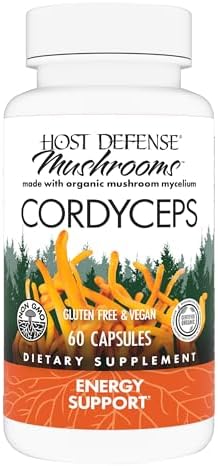
If you’re looking for a high-quality Cordyceps militaris supplement to support your energy, endurance, immune health, and overall wellness, choosing a trusted brand is essential. Not all supplements are made with the same quality, so it’s worth selecting one that uses fruiting body extract, clearly lists its active compounds, and is third-party tested for purity.
👉 Check the latest price, ingredients, customer reviews, and available discounts before making your purchase.

- 1. High nutritional value. 2.Fresh. 3. Have Megaspore head. 4. Pure natural color. 5. Complete, including mycelium,fruit…
- Use Method: 1. Soak in the boiled water and drink it. 2. Soak in the wine. 3. Stew with chicken soup ect. Three specific…
Why we recommend it:
- ✅ Made with premium Cordyceps militaris fruiting bodies
- ✅ Rich in naturally occurring bioactive compounds
- ✅ Supports energy, stamina, and immune function
- ✅ Manufactured in a quality-controlled facility
- ✅ Highly rated by verified customers
Final Verdict
Cordyceps militaris is one of the most promising medicinal mushrooms, backed by growing scientific research for its potential role in supporting energy production, immune function, antioxidant activity, and overall wellness. While it’s not a replacement for medical treatment, a high-quality Cordyceps militaris supplement can be a valuable addition to a healthy lifestyle.
👉 Don’t settle for low-quality mushroom products. Compare the top-rated Cordyceps militaris supplements and choose the one that best fits your needs today.
Conclusion
Cordyceps militaris has evolved from an obscure traditional remedy into one of the most comprehensively investigated medicinal fungi in contemporary pharmacology. Its diverse bioactive profile — anchored by cordycepin and polysaccharides but extending across carotenoids, ergothioneine, ergosterol, lovastatin, GABA, and an exceptionally rich mineral matrix — underlies a therapeutic versatility that few single natural sources can match.
The convergence of anti-inflammatory, anticancer, immunomodulatory, hypoglycemic, hypolipidemic, antioxidant, fibrinolytic, and antimicrobial activities positions C. militaris as a genuinely multi-target pharmacological agent. Critically, the cultivability of C. militaris addresses the sustainability and standardization challenges that limit many wild-sourced medicinal fungi, enabling scalable research and commercial development.
Significant work remains. Large-scale human clinical trials, pharmacokinetic characterization, safety profiling in special populations, and standardization of bioactive compound measurements are all required before C. militaris compounds are emerging as promising candidates for first-line therapeutic interventions in specific medical conditions. indications. Nevertheless, the trajectory of evidence is consistently positive. For healthcare practitioners, researchers, and consumers, C. militaris warrants serious consideration as a functional health ingredient with demonstrated mechanisms across multiple disease-relevant pathways — a rare and promising intersection of ancient wisdom and modern scientific validation.
References and External Authoritative Sources
- World Health Organization — Traditional Medicine Strategy: https://www.who.int/health-topics/traditional-complementary-and-integrative-medicine
- Frontiers in Immunology — Immunomodulatory effects of C. militaris: https://www.frontiersin.org/articles/10.3389/fimmu.2020.575208/full
- MDPI Microorganisms — Antimicrobial properties of C. militaris extracts: https://www.mdpi.com/2076-2607/10/9/1700
- International Diabetes Federation Atlas 2021 — Global diabetes prevalence data: https://diabetesatlas.org/
- MDPI Nutrients — Cordyceps militaris anti-inflammatory mechanisms: https://www.mdpi.com/2072-6643/14/3/433
Author Bio:
Hi, I’m MACHHINDRA Jadhav — a passionate Health Content Writer with 4+ years of experience in the health and wellness space. I specialize in breaking down complex topics like Disease & Conditions, Fitness, Mental Health, and Nutrition into simple, practical advice you can actually use in your daily life.
My goal is not just to inform, but to empower you to take control of your health naturally and confidently. Every article I write is backed by research, real insights, and a deep commitment to helping people live healthier, stronger, and more balanced lives.
If you’re looking for clear, honest, and actionable health guidance — you’re in the right place.
Affiliate Disclosure:
This page may contain affiliate links. If you purchase through these links, we may earn a small commission at no additional cost to you. This helps support our research and keeps our content free.